 WeChat
 Video
Video
 Tiktok
As functional autonomous vehicles navigate through city streets, parks, and communities, their operation relies on a collaborative system consisting of the "skateboard chassis + autonomous driving module + universal swap body." Within this system, the skateboard chassis serves as the unified carrier, integrating core capabilities such as propulsion, steering, braking, and vehicle control. It directly determines whether the vehicle can "run stably and respond precisely," while also laying the critical foundation for an "affordable" solution.
The skateboard chassis has long evolved from a mere structural component into the core capability enabler for functional autonomous vehicles, serving as the essential foundation that allows the autonomous driving module and universal swap body to deliver tangible value.
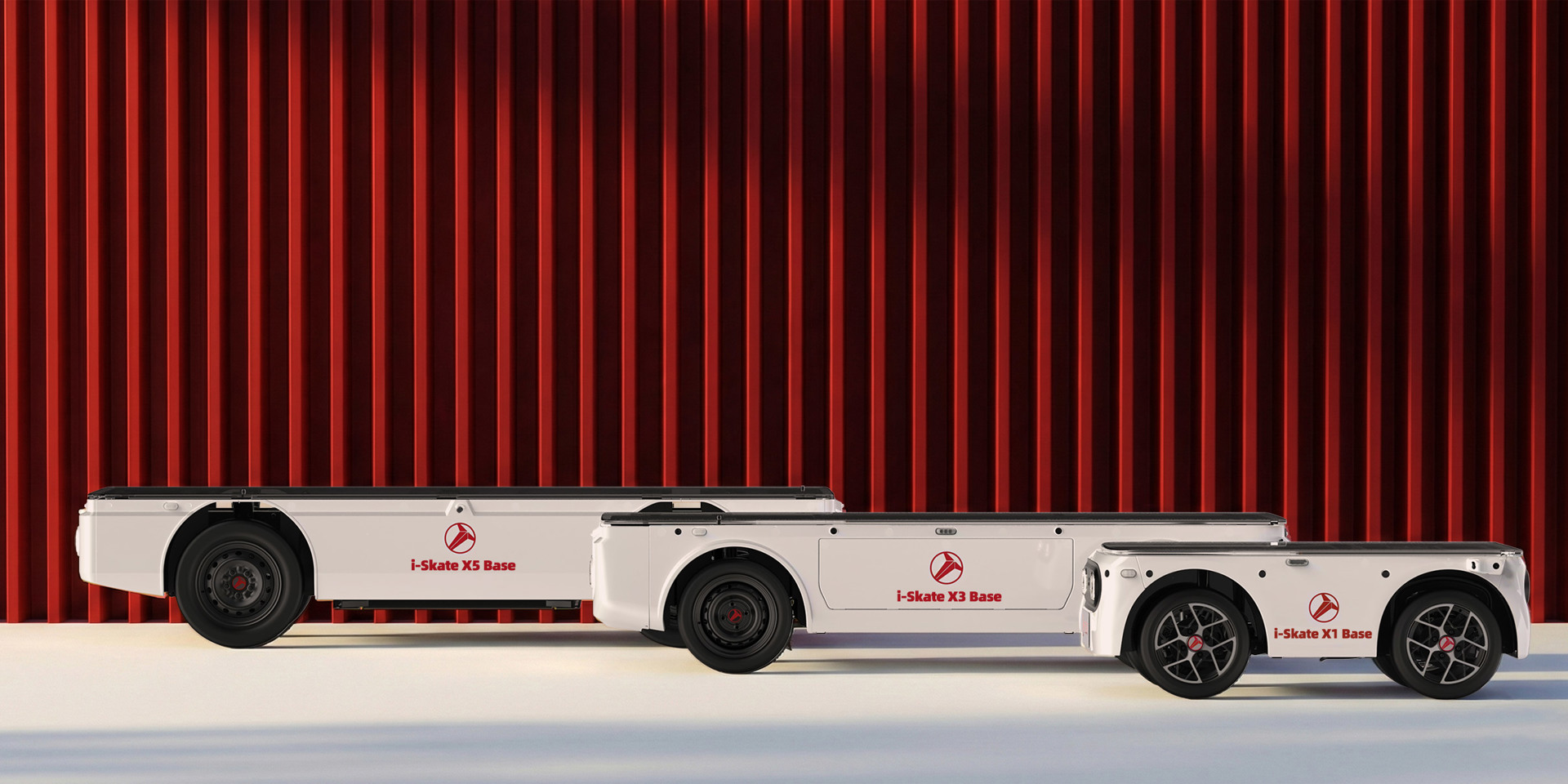
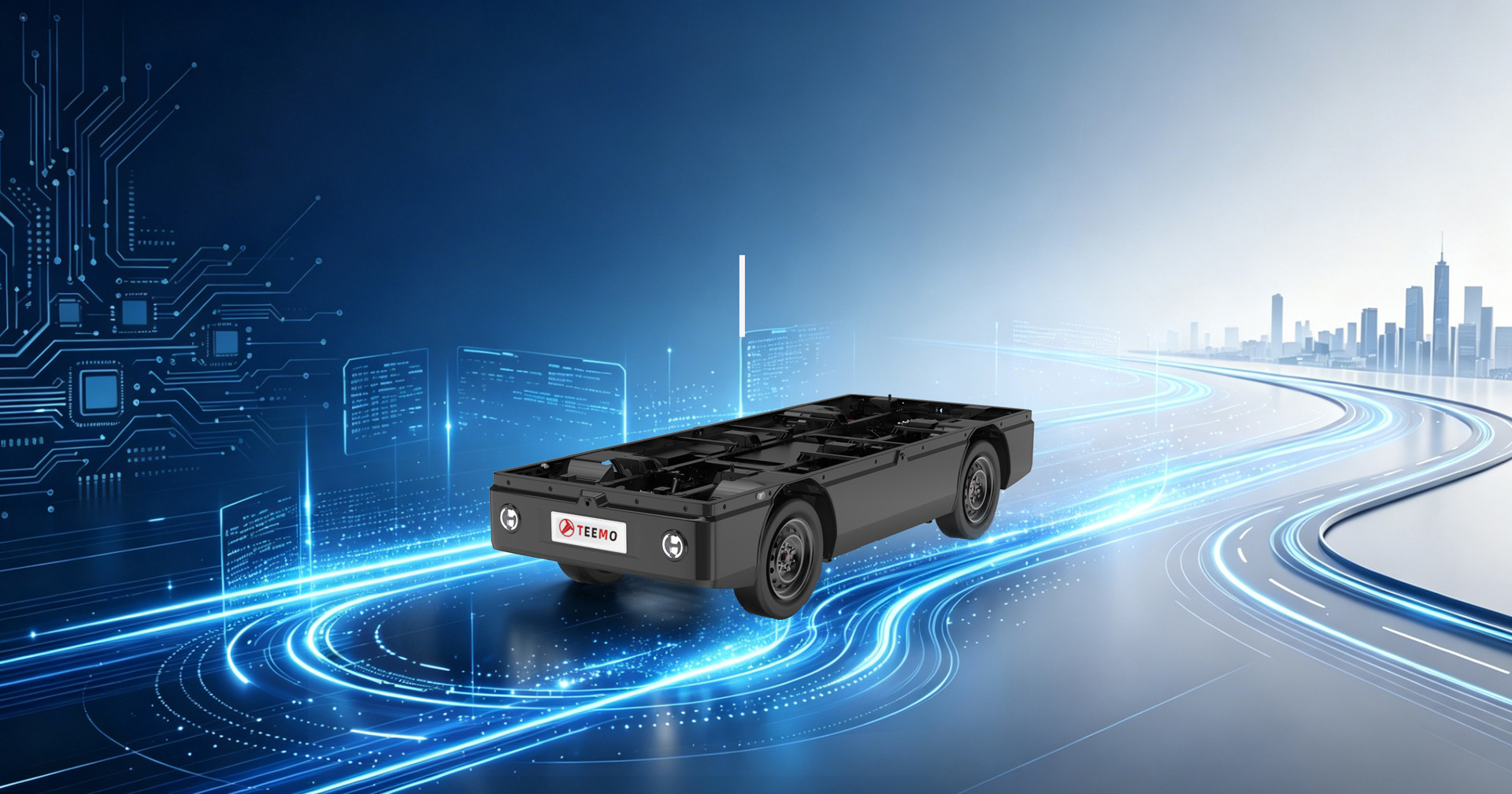
At this pivotal moment, TEEMO unveils the X-Series intelligent skateboard chassis, transitioning autonomous vehicle chassis from single-project engineering customization to a mature platform-based phase that adapts to industry development.
W Series: The Engineering Answer Validated by 10,000 Units of Mass Production
Prior to the launch of the X-Series, TEEMO had already completed key engineering practices for autonomous vehicle chassis through its W-Series skateboard chassis. By deeply integrating the drive-by-wire chassis system with modular swap bodies, the W-Series has established a stable and reliable technology foundation for functional autonomous vehicle applications.
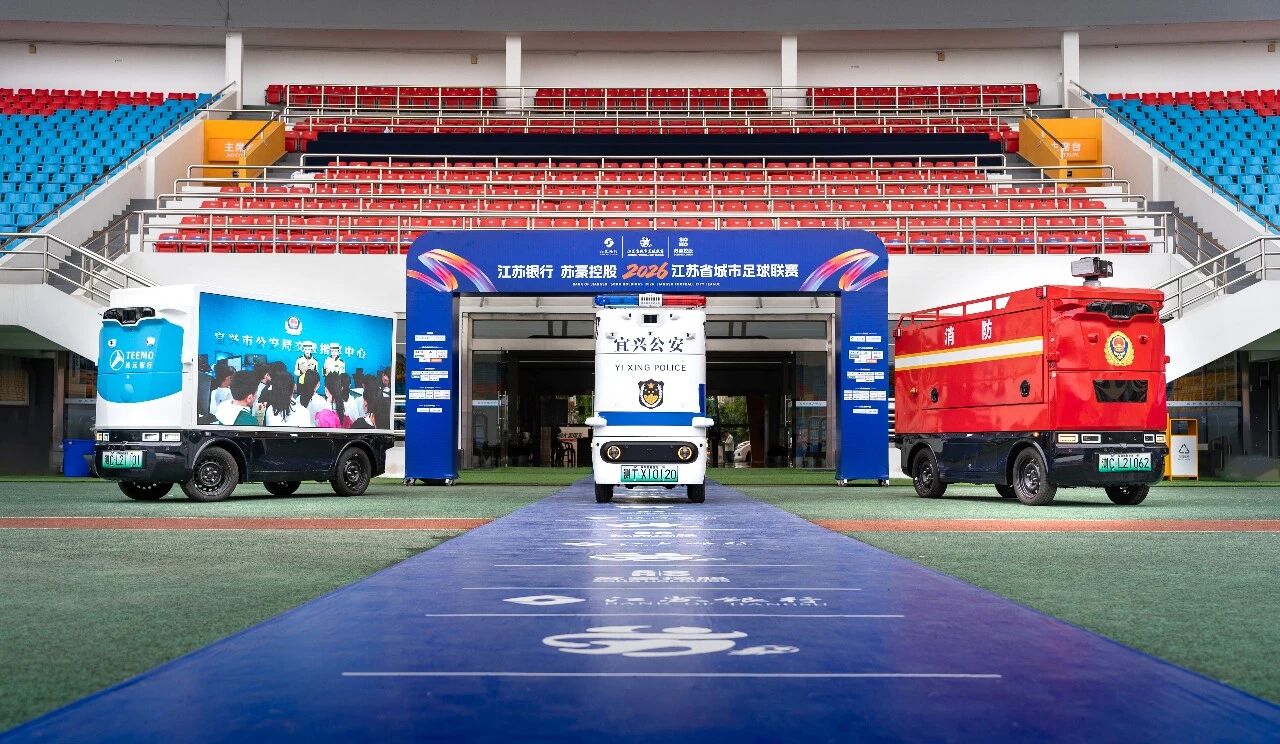
Real-world mass production data is the most compelling proof of engineering maturity. Within the W-Series, the W2 chassis has supported the mass production of over 1,000 units of 3m³autonomous vehicles, while the W7 chassis has enabled the mass production of more than 6,000 units of 5m³autonomous vehicles.
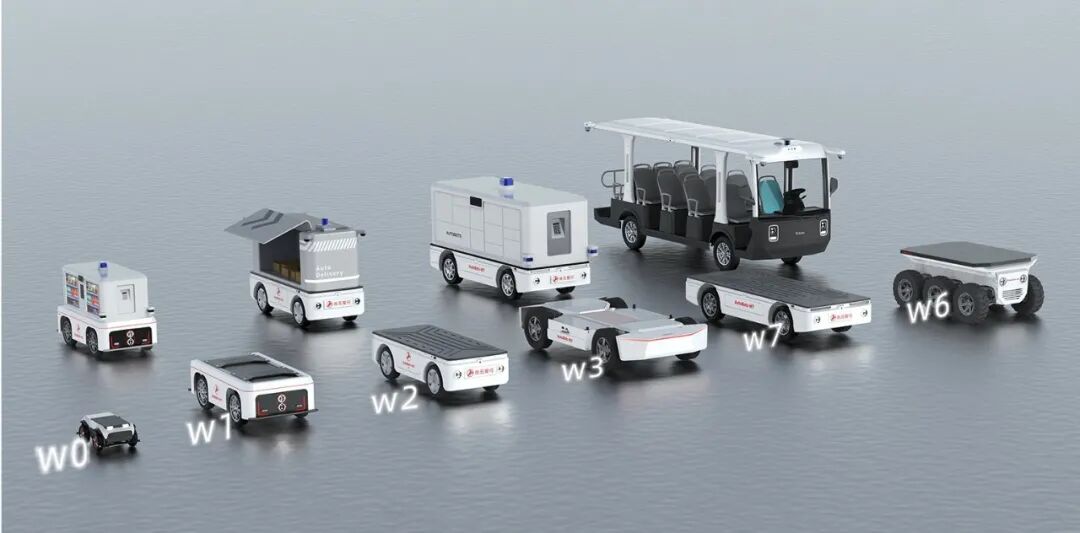
To date, the W-Series has achieved cumulative mass production and delivery of over 10,000 units, and continues to operate in real-world scenarios such as urban distribution logistics and community delivery.
The engineering experience accumulated through this long-term operation provides a solid foundation for subsequent technological upgrades to the chassis platform and serves as a key technical source for the development of the X-Series.
Industry Evolution: Autonomous Delivery Enters the Multi-Form-Factor Collaborative Phase
During the large-scale deployment of the W-Series, TEEMO has observed significant structural shifts in the autonomous delivery industry. The industry has gradually moved beyond the early phase of single-vehicle exploration into a new stage defined by multi-form-factor collaborative operations.
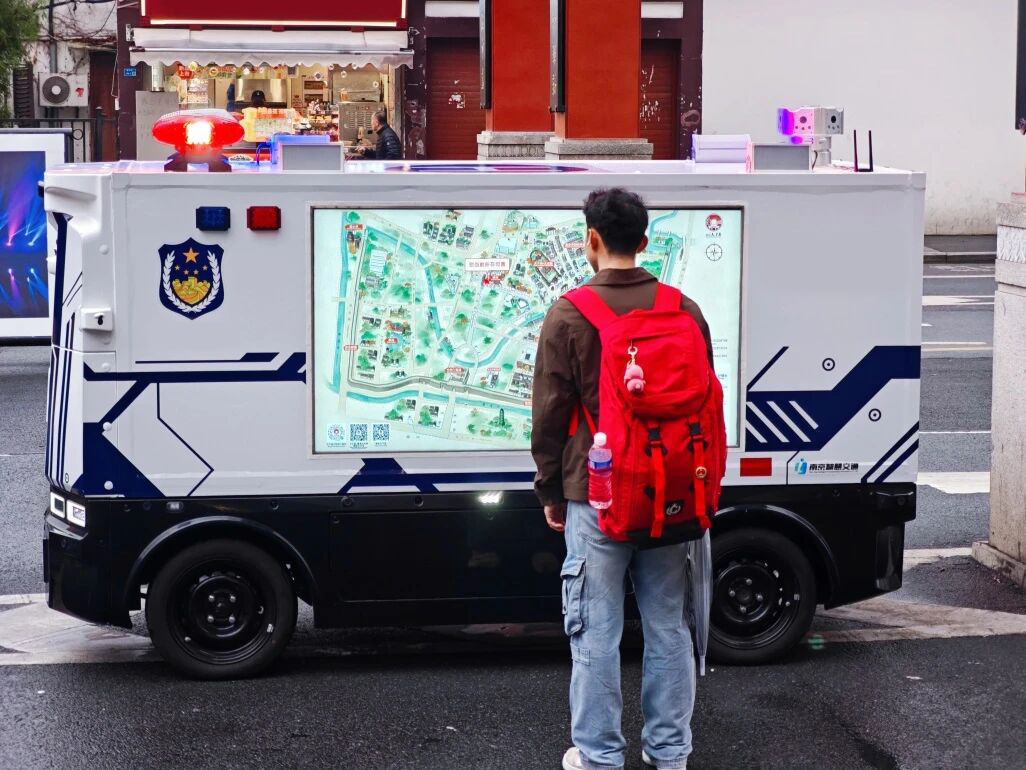
Currently, 5–6m³ autonomous vehicles are emerging as the mainstream form factor for functional autonomous vehicles, driven by their balanced advantages in efficiency and operational costs. In some cities, however, constraints such as road conditions and traffic management requirements have positioned smaller vehicles like the 3m³ units as essential complements to the mainstream models.
In real-world operations, these two vehicle categories are gradually forming a collaborative pattern where mainstream models drive efficiency and smaller vehicles address scenario-specific needs.
X Series: A Chassis Platform System Designed for Mainstream Vehicle Form Factors
Responding to industry shifts, TEEMO launches the X-Series intelligent skateboard chassis platform — not just an iteration, but a systemic reinvention. With upgrades in safety redundancy, communication security, drive-by-wire performance, and scalability, the X-Series enables stable, long-term autonomous operation across diverse scenarios. Built on years of engineering practice and 10,000+ units of mass production, the X-Series delivers a chassis platform matrix spanning multiple vehicle form factors:
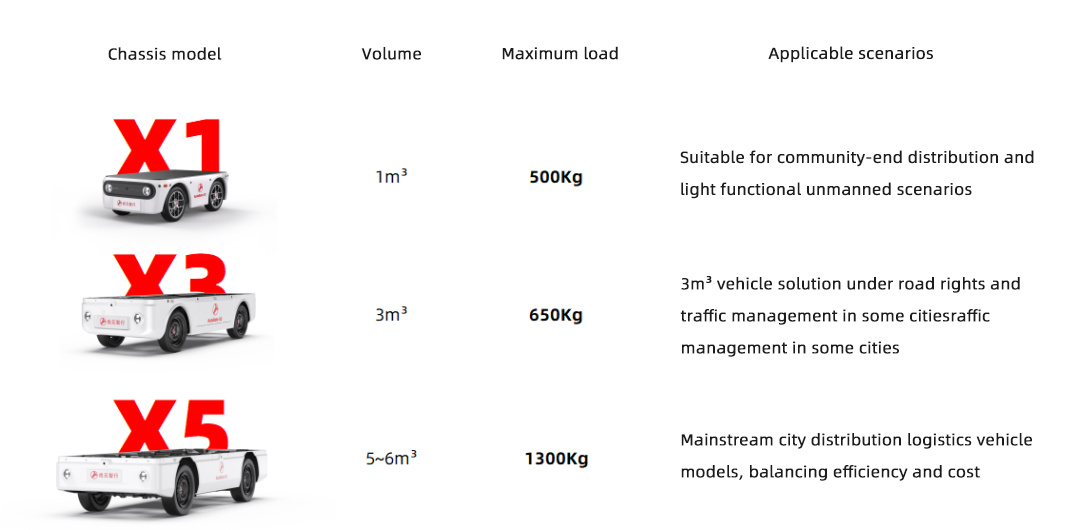
Through this platform architecture, the X-Series forms a more comprehensive chassis technology support system, bridging mainstream delivery and niche scenarios.
Core Technology: Drive-by-Wire Chassis & Chassis Domain Control Architecture
In the autonomous vehicle system architecture, key capabilities such as propulsion, steering, braking, and vehicle control are all realized through unified control of the drive-by-wire chassis system.
Building on this core capability, TEEMO has developed a chassis technology system for the X-Series platform that is centered on the chassis domain control architecture, grounded in drive-by-wire actuation systems, and safeguarded by a comprehensive safety redundancy framework. This elevates the skateboard chassis from a traditional mechanical structural platform to a critical foundation for complete vehicle control in autonomous vehicles.
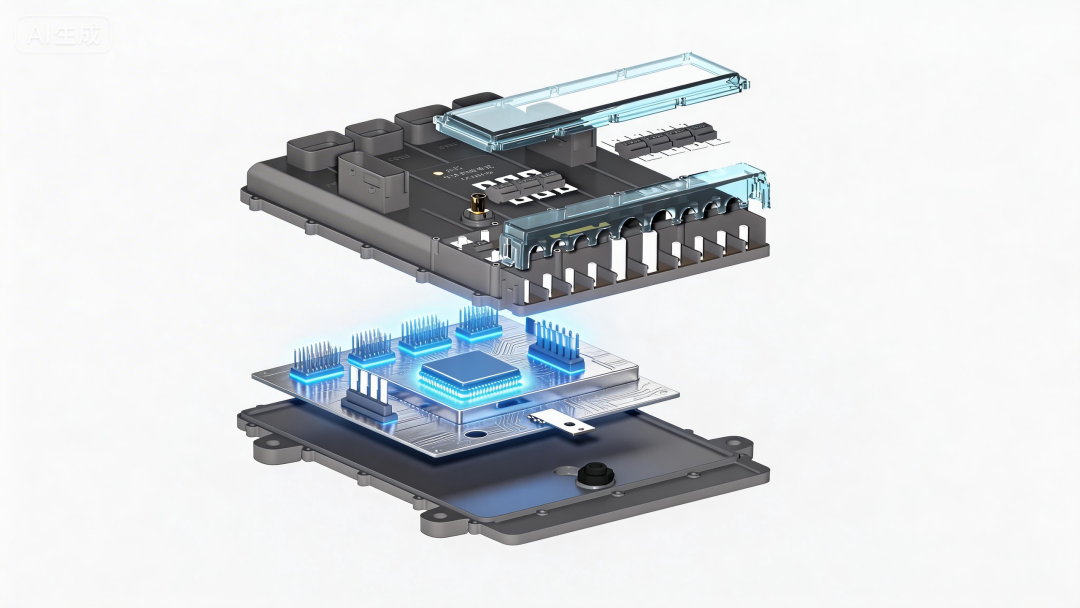
At the control architecture level, the X-Series is equipped with a CCU (Central Control Unit) integrated chassis domain controller. It highly integrates key functions such as chassis domain control, eFuse, electronic parking, wireless communication, and power redundancy into a multi-functional chassis domain control platform. This delivers significant improvements in control response efficiency, system reliability, and electronic architecture simplification.
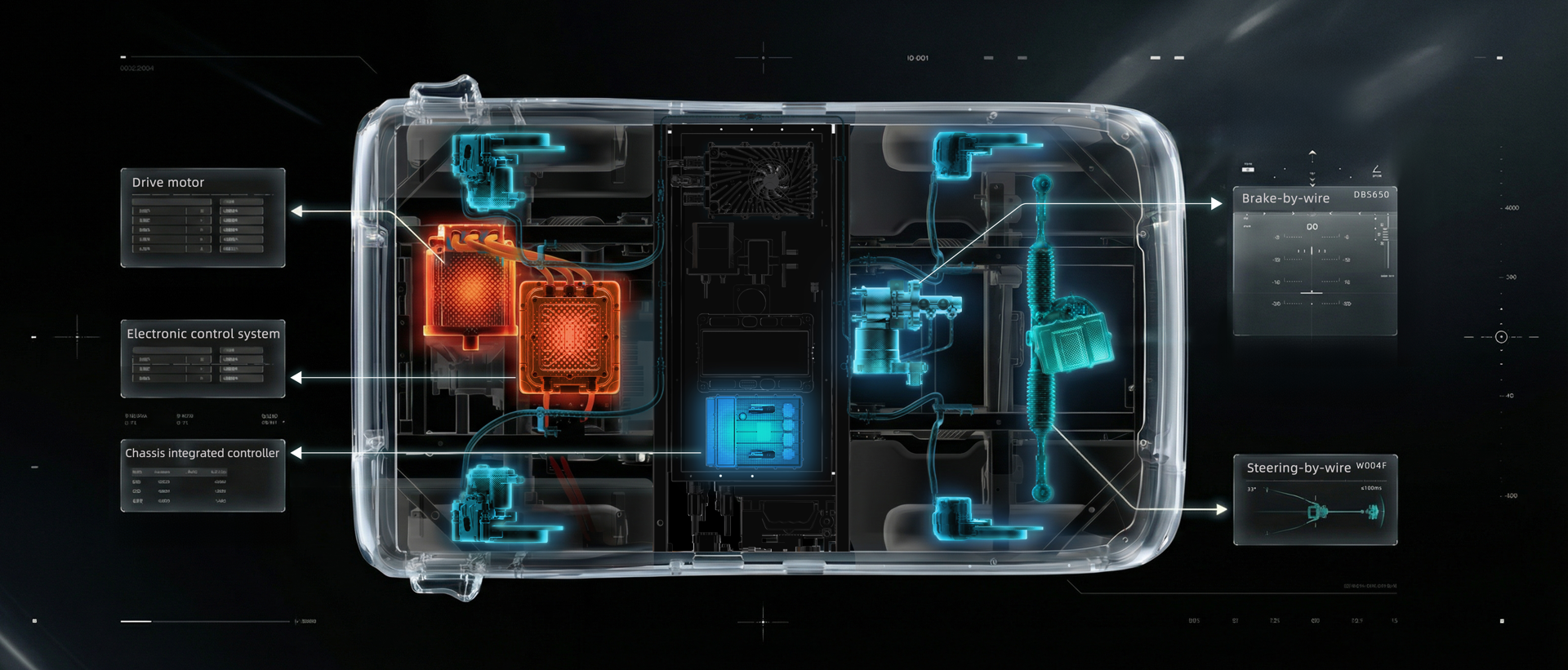
In terms of actuation system and safety architecture, the X-Series adopts a braking solution featuring One Box + RBU (Redundant Brake Unit), delivering stability control functions such as ABS, TCS, and ESC, while establishing redundant mechanisms for both parking braking and service braking.
Meanwhile, key chassis systems are fully equipped with dual-redundancy designs, including dual-redundant steering, dual-redundant wheel speed sensing, dual-redundant power supply, and communication redundancy. These measures meet the higher safety and reliability demands of long-term unmanned autonomous vehicle operations.
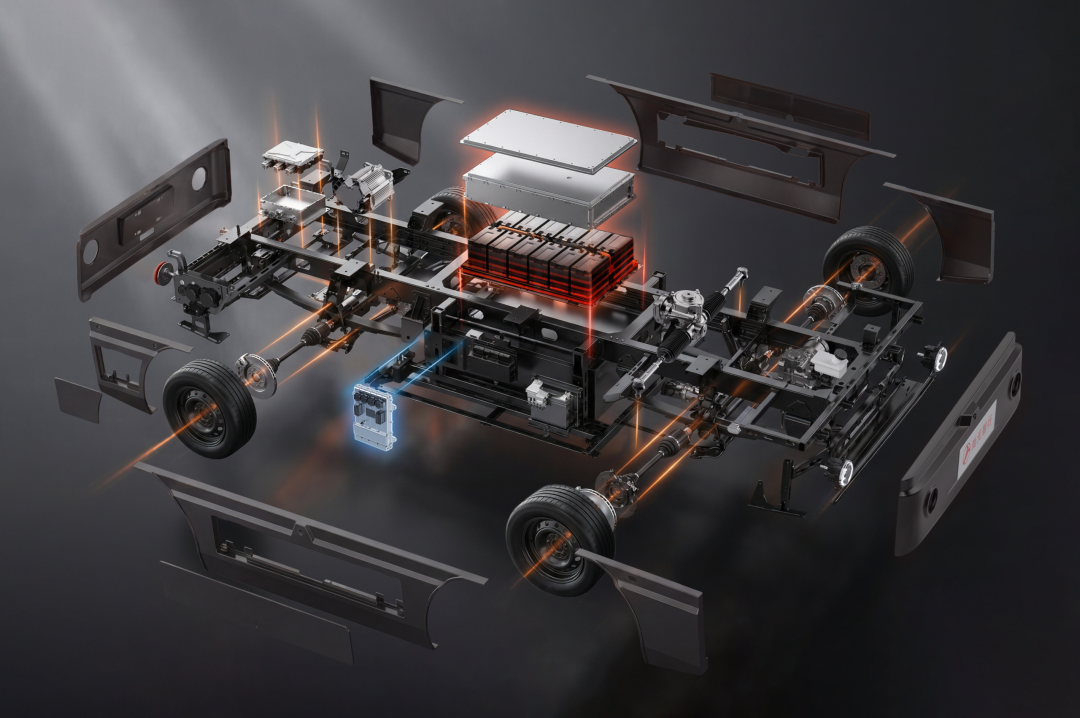
In terms of the energy system, the X-Series supports a high-voltage electrical platform and integrates an intelligent battery system, delivering power redundancy management, eFuse protection, high-voltage fast charging, and wireless charging capabilities. This provides higher efficiency and stronger adaptability for energy replenishment across different autonomous vehicle operational scenarios.
From Engineering Answer to Platform Capability
Whether navigating the alternating conditions of day and night or maintaining stable operation on low-temperature and icy roads, these continuous testing and operational scenarios serve as the most direct validation of the autonomous vehicle chassis platform's capabilities.
If the W-Series completed the engineering practice validation of autonomous vehicle chassis through mass production and delivery of over 10,000 units, then the X-Series builds on this foundation to further establish a unified chassis platform system tailored for industry development.
The X-Series is systematically designed around unified interfaces, unified architecture, and modular hardware. Standardized mechanical interfaces and electrical protocols enable different swap body systems to achieve rapid adaptation and plug-and-play functionality. This supports the efficient development of multi-form-factor autonomous vehicles and multi-scenario applications while maintaining platform stability.
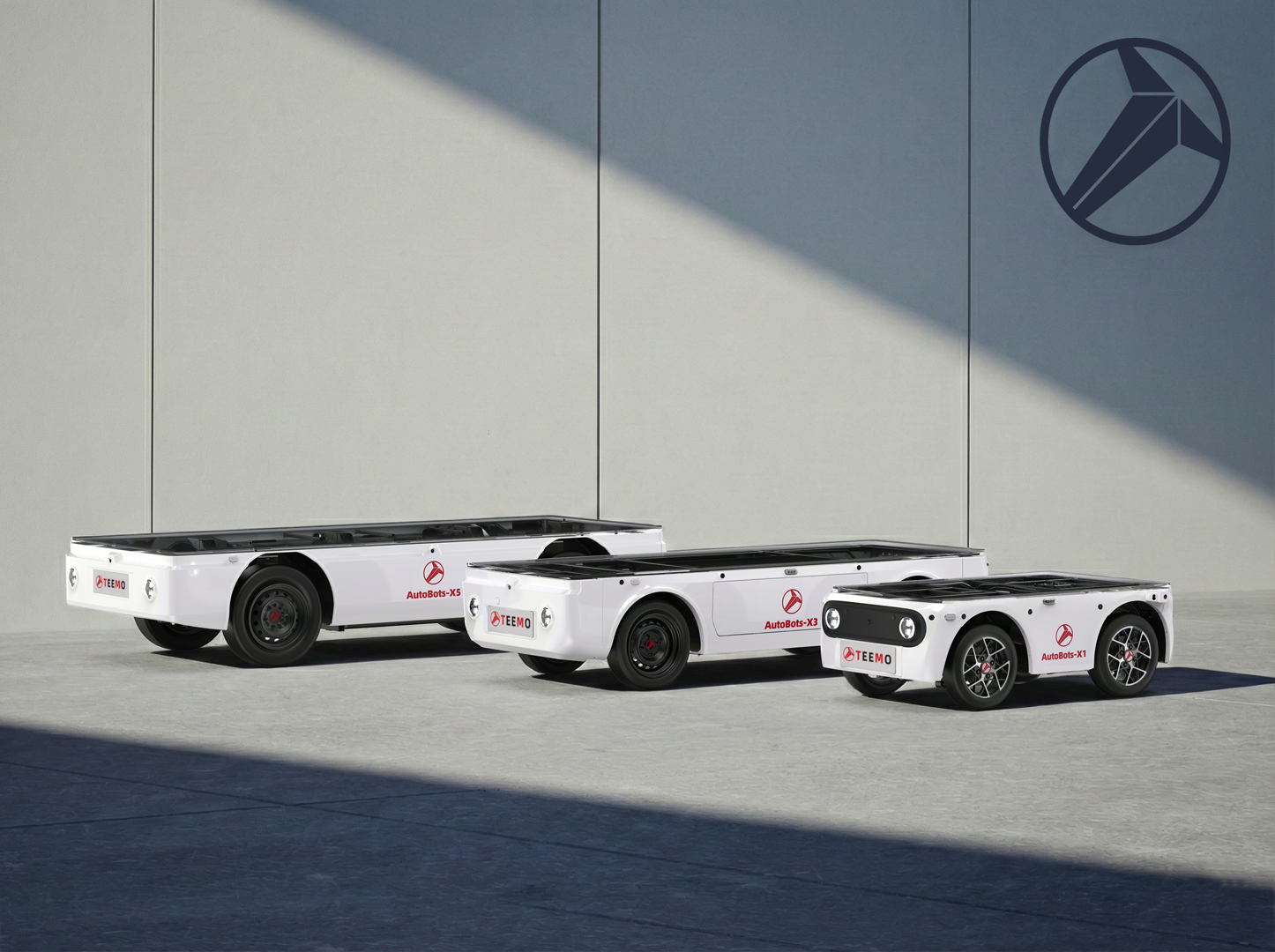
In terms of platform capability, the X-Series further enhances chassis system reliability and handling performance. The fully redundant drive-by-wire system, high-voltage platform architecture, and highly integrated chassis domain control system enable the vehicle to maintain stable driving posture and precise control response even under complex road conditions and extreme environments.
Looking ahead, within autonomous delivery ecosystems, the chassis platform will evolve from a mere vehicle structure carrier into critical infrastructure for autonomous vehicle system capabilities. TEEMO will continue to deepen its core skateboard chassis technology, leveraging increasingly mature platform capabilities to empower the functional autonomous vehicle industry toward large-scale development.